Preface to the Student
From Me to You
The most incomprehensible thing about the universe is that it is comprehensible.
—Albert Einstein
The day I went into physics class it was death.
—Sylvia Plath, The Bell Jar
Let’s have a little chat before we start. A rather one-sided chat, admittedly, because you can’t respond, but that’s OK. I’ve talked with many of your fellow students over the years, so I have a pretty good idea of what’s on your mind.
What’s your reaction to taking physics? Fear and loathing? Uncertainty? Excitement? All the above? Let’s face it, physics has a bit of an image problem on campus. You’ve probably heard that it’s difficult, maybe impossible unless you’re an Einstein. Things that you’ve heard, your experiences in other science courses, and many other factors all color your expectations about what this course is going to be like.
It’s true that there are many new ideas to be learned in physics and that the course, like college courses in general, is going to be much faster paced than science courses you had in high school. I think it’s fair to say that it will be an intense course. But we can avoid many potential problems and difficulties if we can establish, here at the beginning, what this course is about and what is expected of you—and of me!
Just what is physics, anyway? Physics is a way of thinking about the physical aspects of nature. Physics is not better than art or biology or poetry or religion, which are also ways to think about nature; it’s simply different. One of the things this course will emphasize is that physics is a human endeavor. The ideas presented in this book were not found in a cave or conveyed to us by aliens; they were discovered and developed by real people engaged in a struggle with real issues.
You might be surprised to hear that physics is not about “facts.” Oh, not that facts are unimportant, but physics is far more focused on discovering relationships and patterns than on learning facts for their own sake.
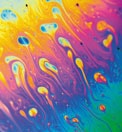
For example, the colors of the rainbow appear both when white light passes through a prism and—as in this photo—when white light reflects from a thin film of oil on water. What does this pattern tell us about the nature of light?
Our emphasis on relationships and patterns means that there’s not a lot of memorization when you study physics. Some—there are still definitions and equations to learn—but less than in many other courses. Our emphasis, instead, will be on thinking and reasoning. This is important to factor into your expectations for the course.
Perhaps most important of all, physics is not math! Physics is much broader. We’re going to look for patterns and relationships in nature, develop the logic that relates different ideas, and search for the reasons why things happen as they do. In doing so, we’re going to stress qualitative reasoning, pictorial and graphical reasoning, and reasoning by analogy. And yes, we will use math, but it’s just one tool among many.
It will save you much frustration if you’re aware of this physics–math distinction up front. Many of you, I know, want to find a formula and plug numbers into it—that is, to do a math problem. Maybe that worked in high school science courses, but it is not what this course expects of you. We’ll certainly do many calculations, but the specific numbers are usually the last and least important step in the analysis.
As you study, you’ll sometimes be baffled, puzzled, and confused. That’s perfectly normal and to be expected. Making mistakes is OK too if you’re willing to learn from the experience. No one is born knowing how to do physics any more than he or she is born knowing how to play the piano or shoot basketballs. The ability to do physics comes from practice, repetition, and struggling with the ideas until you “own” them and can apply them yourself in new situations. There’s no way to make learning effortless, at least for anything worth learning, so expect to have some difficult moments ahead. But also expect to have some moments of excitement at the joy of discovery. There will be instants at which the pieces suddenly click into place and you know that you understand a powerful idea. There will be times when you’ll surprise yourself by successfully working a difficult problem that you didn’t think you could solve. My hope, as an author, is that the excitement and sense of adventure will far outweigh the difficulties and frustrations.
Getting the Most Out of Your Course
Many of you, I suspect, would like to know the “best” way to study for this course. There is no best way. People are different and what works for one student is less effective for another. But I do want to stress that reading the text is vitally important. The basic knowledge for this course is written down on these pages, and your instructor’s number-one expectation is that you will read carefully to find and learn that knowledge.
Despite there being no best way to study, I will suggest one way that is successful for many students.
Read each chapter before it is discussed in class. I cannot stress too strongly how important this step is. Class attendance is much more effective if you are prepared. When you first read a chapter, focus on learning new vocabulary, definitions, and notation. There’s a list of terms and notations at the end of each chapter. Learn them! You won’t understand what’s being discussed or how the ideas are being used if you don’t know what the terms and symbols mean.
Participate actively in class. Take notes, ask and answer questions, and participate in discussion groups. There is ample scientific evidence that active participation is much more effective for learning science than passive listening.
After class, go back for a careful re-reading of the chapter. In your second reading, pay closer attention to the details and the worked examples. Look for the logic behind each example (I’ve highlighted this to make it clear), not just at what formula is being used. And use the textbook tools that are designed to help your learning, such as the problem-solving strategies, the chapter summaries, and the exercises in the Student Workbook.
Finally, apply what you have learned to the homework problems at the end of each chapter. I strongly encourage you to form a study group with two or three classmates. There’s good evidence that students who study regularly with a group do better than the rugged individualists who try to go it alone.
Did someone mention a workbook? The companion Student Workbook is a vital part of the course. Its questions and exercises ask you to reason qualitatively, to use graphical information, and to give explanations. It is through these exercises that you will learn what the concepts mean and will practice the reasoning skills appropriate to the chapter. You will then have acquired the baseline knowledge and confidence you need before turning to the end-of-chapter homework problems. In sports or in music, you would never think of performing before you practice, so why would you want to do so in physics? The workbook is where you practice and work on basic skills.
Many of you, I know, will be tempted to go straight to the homework problems and then thumb through the text looking for a formula that seems like it will work. That approach will not succeed in this course, and it’s guaranteed to make you frustrated and discouraged. Very few homework problems are of the “plug and chug” variety where you simply put numbers into a formula. To work the homework problems successfully, you need a better study strategy—either the one outlined above or your own—that helps you learn the concepts and the relationships between the ideas.
Getting the Most Out of Your Textbook
Your textbook provides many features designed to help you learn the concepts of physics and solve problems more effectively.
TACTICS BOXES give step-by-step procedures for particular skills, such as interpreting graphs or drawing special diagrams. Tactics Box steps are explicitly illustrated in subsequent worked examples, and these are often the starting point of a full Problem-Solving Strategy.
PROBLEM-SOLVING STRATEGIES are provided for each broad class of problems—problems characteristic of a chapter or group of chapters. The strategies follow a consistent four-step approach to help you develop confidence and proficient problem-solving skills: MODEL, VISUALIZE, SOLVE, REVIEW.
Worked EXAMPLES illustrate good problem-solving practices through the consistent use of the four-step problem-solving approach The worked examples are often very detailed and carefully lead you through the reasoning behind the solution as well as the numerical calculations.
STOP TO THINK questions embedded in the chapter allow you to quickly assess whether you’ve understood the main idea of a section. A correct answer will give you confidence to move on to the next section. An incorrect answer will alert you to re-read the previous section.
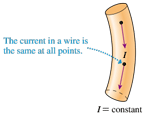
Blue annotations on figures help you better understand what the figure is showing. They will help you to interpret graphs; translate between graphs, math, and pictures; grasp difficult concepts through a visual analogy; and develop many other important skills.
Schematic Chapter Summaries help you organize what you have learned into a hierarchy, from general principles (top) to applications (bottom). Side-by-side pictorial, graphical, textual, and mathematical representations are used to help you translate between these key representations.
Each part of the book ends with a KNOWLEDGE STRUCTURE designed to help you see the forest rather than just the trees.
Now that you know more about what is expected of you, what can you expect of me? That’s a little trickier because the book is already written! Nonetheless, the book was prepared on the basis of what I think my students throughout the years have expected—and wanted—from their physics textbook. Further, I’ve listened to the extensive feedback I have received from thousands of students like you, and their instructors, who used the first four editions of this book.
You should know that these course materials—the text and the workbook—are based on extensive research about how students learn physics and the challenges they face. The effectiveness of many of the exercises has been demonstrated through extensive class testing. I’ve written the book in an informal style that I hope you will find appealing and that will encourage you to do the reading. And, finally, I have endeavored to make clear not only that physics, as a technical body of knowledge, is relevant to your profession but also that physics is an exciting adventure of the human mind.
I hope you’ll enjoy the time we’re going to spend together.