Skylar Zajac
UN 1015
Fall 2024
Professor Kunkuri
It feels like a long time since I first sat down to consider this exact assignment for my midterm, and a sincerely unfathomable stretch since I first sat down in class to start learning how to write at a college standard. Some things have changed a lot: I now understand the rhetorical elements that make a given genre what it is, and how audience expectations inform these pieces of the puzzle. My writing process has become much more organized, and my research skills have greatly improved. However, I did come in with some knowledge that was helpful in meeting my goals for the course, thanks to having spent time gaining professional writing skills as a journalist. As such, this class was a great opportunity to build on and fine-tune those skills: now, with great fluency, I can extract the most useful information from a source for my purposes, use the information ethically with proper credit, and fully understand the ideas I am reading and referencing.
To become a stronger writer, I had to increase my reading skills. Comparing two sources in the Comparative Source Analysis helped me understand what made them different, and why these differences made them what they are. I now know that audiences expect different things from different media formats, and how rhetorical decisions play into these expectations to fulfill the requirements of their genre. A news article may include some personal opinions, while an academic paper probably includes little to none of the author’s personal feelings on its subject, depending on the content and the context, and this is just one of countless examples of how rhetorical differences can define a piece of writing. Although this concept took me almost the entire semester to fully grasp, leading to me revising the related assignments several times, I can say now that I thoroughly understand this portion of the material.
Meanwhile, my research and critical reading skills were sharpened when I began researching for my final article, and ultimately compiling that research into a Worknet. I learned how to carefully cite each piece of information, when to use quotes and when to use paraphrases, and how to borrow information without plagiarizing it. I also discovered that each piece of information in a writing project is very intentionally placed, with ideas in one sentence very often providing critical context for every sentence thereafter. A scientific paper is not just a list of facts, but a synthesis of ideas informed, but not manipulated, by the author’s own thoughts. This is crucial to understand not just when reading a source, but for writing your own as well. Given my previous experiences in researching for various projects, I had little trouble picking up and using these skills, and I am quite proud of how they have developed over the past few months in this course.
Taking on complex projects such as my final Journal Article, as well as an Infographic based upon it, have taught me the importance of an organized writing process. Given what I have picked up from this class and my previous professional writing experience as a journalist, I have arrived at a writing process that works very well for me. I start by ensuring that I fully understand the genre conventions that I am working in, as outlined previously. I then cover some background research, and write out an outline based upon the information I have gathered. Once I start filling in the body of my piece, I frequently conduct additional research to fill in pieces of information that make whatever I am writing more successful and complete. After finishing my initial writing by adding an introduction and/or conclusion when necessary, I run it by an instructor and/or editor whenever possible, and make edits based on their feedback. I also run through the piece myself, just to make sure I catch as many possible improvements as I can. This is what works for me, and many other writers follow a similar process, so by understanding how I and others approach writing projects, I can begin to understand some of the choices people make when writing the sources I may use.
Leaving this course with the skills described above, which I have developed from the four major course assignments I have touched upon, it is time to ponder how I will use them in the future. I will undoubtedly continue my work in journalism, especially now that I have been elected to an editorial board position on The Lode at Michigan Tech. To that end, I think applying the writing process I have developed will be extremely helpful: with a more organized approach, I would really enjoy taking on larger projects, such as writing multiple stories about a complex issue that develops over time. As for future academic writing, I would be interested in getting involved in research in the upcoming years, and I can most certainly use research and critical reading skills in that field. I hope to use these new abilities to create a scientific research article on a subject in environmental or transportation engineering, while working alongside a professor and perhaps some other peers to see it through. Perhaps my writing career will take me to other places as well, but the things I have learned in this course will be useful no matter what.
On a final note, it is important for me to note that none of the documents below utilize Generative Artificial Intelligence (GAI) in any way, shape or form. I believe that GAI has limited ethical uses in creative work, and that its ethical implications are dubious at best. Furthermore, I believe that human ingenuity is always capable of doing better work than GAI.
Below is a list of three potential topics for further research as part of my long-term journal article project. These topics are all roughly of equivalent interest to me, but vary in terms of practicality.
The first subject I will suggest is a study of the factors that create high public transportation ridership – I would focus on a particular city that already has this trait, such as New York City or Hong Kong, and examine what exactly makes it easy and appealing to use transit in that place. I intend to pursue a career related to public transportation after earning my degree, so I am greatly interested in what features make a transit system successful in capturing customers away from private transportation options. Government documents and census statistics would be instrumental in such a project, providing me with information on system usage, policy, and infrastructure. I would likely also need to consult sources regarding the culture of the city I decide to study. The only issue I would have with this topic is that it does not fit too well with my major – it would be better suited to civil engineering over environmental – but it would be relevant to my career trajectory, if not just plain fun.
Staying with the subject matter of transportation, another topic of interest would be a comparison of the environmental impacts of electric vehicles and rail transportation. Given my interest in public transit, trains have long been a particular fascination of mine, and their potential for supporting a climate-friendly transportation system cannot be understated. As I am studying environmental engineering, this subject would be apt to my major in addition to my interests. To my knowledge, there is great debate about whether trains or cars are superior as transportation vessels, as well as discussion on whether or not electric vehicles are truly environmentally friendly, making this comparison potentially important to study. Research for this topic may involve aggregating and comparing data on carbon emissions of producing and using both trains and electric cars, as well as the physical impact of their respective right-of-ways. Although this is my preferred topic, it may need to be narrowed down in some way so as to be practical for study.
This final topic proposal is based upon my interest in United States elections; particularly, those in which unusual or unprecedented outcomes occur. The specific election this paper would focus on would be the 1998 Minnesota gubernatorial election, in which Jesse Ventura of the Reform Party unexpectedly defeated both major-party candidates. I would like to examine the social conditions of late-1990s Minnesota which allowed a third-party candidate to win such a significant office, as well as the influence of national events leading up to the election, such as the recurring popularity of Reform presidential candidate Ross Perot. This could be a difficult topic to research, but potential sources to consult may include newspaper articles, polling data, debates and interviews. Overall, this election represents a unique time in American political history, and I would be fascinated to learn about the various events and ideas that allowed this precedent-defying moment to occur. However, it would not be remotely applicable to my field of study, leaving it somewhat outside my area of expertise.
After examining a few publications related to environmental science, engineering and sustainability, I have selected Illumin as the journal to submit my article to. Illumin is a publication from the University of Southern California that focuses on engineering as it pertains to everyday life, covering topics such as machine learning-powered traffic lights and the physics of the Frisbee. For its focus on engineering in the typical facets of life, its clearly defined submission guidelines, and its superiority to other viable journals for my line of study, I have decided that Illumin best supports my topic of comparing trains and electric cars on environmental merits.
On the surface, the general subject of “everyday engineering” that Illumin focuses on speaks to my interests, and that was a motivating factor in selecting this journal. I chose an engineering major based on my interest in the inner workings of transportation, something that we all participate in every day, so this journal seemed like a natural outlet for my input on the subject. I also happened to enjoy nearly all of the articles I saw while reading some to get a feel for the journal, and it would genuinely be fun to have my work published by an organization I like and support; I think it’s very important to enjoy the work that you are doing while completing a long-term research project.
Illumin does more than just explore the engineering behind the various subjects explored in its articles; it goes beyond, explaining certain political, social and economic ramifications of the technologies discussed by its writers. Some articles even go so far as to focus directly on these issues, while exploring engineering as it pertains to them, such as the potential of using blockchain technology to assist in connecting unhoused people in North America to life-saving resources. Since transportation is a very political issue to many people – and so is climate change, to an even greater extent – a journal that does not back away from discussing the greater consequences of the technology it features is arguably a perfect fit for a piece such as mine that discusses transportation in the context of our current climate crisis.
Along with this engineering-focused journal, I also considered two publications that are more centric upon environmental science: Cura Terra at Georgetown University, and Consilience at Columbia University. I enjoyed the content presented in the former publication, but the website offered varied and outdated information on submissions, which lent itself to a certain level of confusion and unprofessionalism that was fairly unappealing. Consilience was more promising, but was also considerably more graduate research-oriented than Illumin and Cura Terra, which seemed a poor fit for a first-year researcher. I also decided that an engineering-based journal would be a better fit for my subject matter; despite its roots in the study of climate change, my article will have a strong technological focus that is in line with other articles published by Illumin.
Of course, Illumin has a number of guidelines that I must follow while composing my final work for submission. As I have discussed above, this publication seeks works that, among other frameworks, “reflect on events or conditions that have been (or may be) significantly altered by engineering concepts or applications.” The very nature of my topic fits this particular requirement well, but style and formatting guidelines will also need to be considered. I will need to cite all of my sources using the MLA format, which I will need to re-educate myself on; I used this citation style frequently throughout high school, but I have not written an academic paper with citations in many months. The submission guidelines also call for a 150-200 word abstract and a two-sentence author biography. It will be important to keep my paper within the 1500 to 2000-word limit, which may be accomplished using my plan to focus on a small list of two to three urban areas to study for the comparison of transportation modes. Graphics are also encouraged, and I am looking into adding charts that condense and display cited data.
Models for my Project
- “Red Light, Green Light” by Daniel Suh, University of Southern California
I found this work to be instructive due to its similarities to my proposed article. Both this piece and mine aim to analyze a problem or question facing modern transportation, and aim to find a solution based on the technology of our time: Suh’s article discusses the use of machine learning to increase traffic light efficiency, while mine will aim to answer whether trains or electric cars can be more beneficial for the environment. Because of this core connection, I can use this article as a model for my eventual creation, as I will no doubt produce a work that is at least inadvertently somewhat similar to Suh’s, especially when it comes to his use of charts and blueprints and the rough structure of his article.
- “Diverting Away from the Steel Age: Metallurgy Reimagined in the Context of the Climate Crisis” by Olivia Acarregui, University of Southern California
This article, which discusses the importance of steel and the changing ways in which it is produced in the context of global warming, was useful to me as a blueprint for discussing how technologies change to adapt to our world’s climate crisis. My article, which will discuss two environmentally-friendlier alternatives to the gas-powered automobile, will have a partial focus on examining the processes that create emissions in all three transportation forms; Acarregui’s article similarly compares two different methods of producing steel, and I could potentially use diagrams and step-by-step descriptions as she does to outline the inputs and impacts of cars and trains.
Acarregui, Olivia. "Diverting Away from the Steel Age: Metallurgy Reimagined in the Context
of the Climate Crisis." Illumin, vol. 22, no. 2,
https://illumin.usc.edu/diverting-away-from-the-steel-age-metallurgy-reimagined-in-the-c
ontext-of-the-climate-crisis/.
Consilience, edited by Grace Fitzgerald, Columbia University, 7 June 2023,
journals.library.columbia.edu/index.php/consilience/index.
Cura Terra, Georgetown University, May 2023, gucuraterra.org/.
Illumin Editorial Team. Illumin Magazine, edited by Minh Pham, University of Southern
California, July 2024, illumin.usc.edu/.
Nussbaum, Zoe. "From Curbs to Code: Using Modern Digital Technology to Confront
Homelessness." Illumin, vol. 24, no. 2, 28 Aug. 2023,
https://illumin.usc.edu/from-curbs-to-code-using-modern-digital-technology-to-confront-
Suh, Daniel. "Red Light, Green Light." Illumin, vol. 24, no. 2, 1 Apr. 2024,
This is the final draft of my comparative source analysis. I completed this document in three distinct phases: one in which I wrote my initial draft after beginning my research, and a second in which I improved on the original version by incorporating more connections between rhetorical devices and goals, and by using my increased writing skills to slightly tweak grammar and presentation. Finally, when it came time to make final edits for my end-of-semester portfolio, I made some content adjustments where I cut certain parts where I compared similar elements of each source and added more information that directly contrasted between the two. This was the first major assignment of the semester, and possibly the one where I put the least amount of effort into the first draft, and it definitely shows in the amount of revisions I had to make compared to the other core assignments. The benefit this had was that I now have a much greater understanding of the different rhetorical elements that separate one genre from another, thanks to this assignment.
As the subject of green transportation has increased in relevance over the years, the role of automobiles run on electricity has grown in stature and in controversy within the technological canon. These electric vehicles (EVs) have been the subject of research and debate, resulting in the publishing of many different sources about this subject, especially when it comes to their environmental impact. This paper aims to compare a pair of such publishings: The Future of Electric Vehicles: A Comprehensive Review of Technological Advancements, Market Trends, and Environmental Impacts, a journal article written by researcher Priyadarshan Patil, and How Green Are Electric Cars? It’s Complicated, a YouTube video published by news publication The Guardian. Despite the two sources presenting their information in different ways, and both authors demonstrating different perspectives on EV technology, they ultimately share a goal of revealing that EVs do have some negative environmental effects despite being overall better for decreasing climate change than gas-powered cars.
On the surface, the two sources are very visually different. Patil’s article is mostly text-based with a few added charts, while the video is entirely auditory-visual by nature. This results in differing methods of informational organization: in the case of Patil’s article, the author must make clear distinctions between each point by splitting the text into sections, each demarcated by a unique subtitle, while the video augments its informational transitions with visual elements and animations. This type of transition allows for a more fluid organization of points, while Patil’s article draws hard lines between its arguments. For example, at around two minutes and 20 seconds into the video, the editors play recently-displayed footage in reverse, as the narrator transitions between discussing EV manufacturing and fueling: “taking a step back from the manufacturing process, there’s a complicated environmental issue that goes beyond the vehicles themselves” (1:25 - 1:29). The text article basically does not have transitions, nor does it revisit other arguments within each body section, completely concluding each point before introducing a new one without using any transitional language. This is also understandable due to the pieces’ different rhetorical purposes: the video is designed to create a brief overview that supports a certain argument, while the journal article presents much more detail, and thus encourages a more defined organization of information to better relay its points.
The genre of each piece also affects the visuals they use. Patil’s article, when it does introduce non-text elements, usually relies on charts and graphs that supplement information relayed in adjacent paragraphs. A significant example is found in the “Market Trends” section of his paper, with two bar graphs and a pie chart explaining EV sales around the world across two pages. This method of presentation is standard for the genre of scholarly articles, and usually contains detailed statistical information. In comparison, the video, as a piece of journalistic work, relies more heavily on infographics than statistical charts. Infographics are a common visual device in journalism, and usually convey broad informational points rather than statistics. Both kinds of visual presentation, however, serve to augment certain arguments within their respective works by making key information easy to digest quickly. Readers of scholarly articles also usually expect data to be visually represented, so as to make it more understandable; in video formats, these numbers are often simply read aloud to the viewer.
Beneath the visual surface, the perspectives of each author and the way they present them vary radically between the two sources. Firstly, Patil’s article uses a lot of neutral language in presenting both benefits and drawbacks of EVs for the environment, which is fairly conventional for an academic research paper. Much of the content consists of simply presented objective facts, and negative aspects are usually balanced out with positive ones; for example, while discussing the lithium-ion batteries used in most EVs, Patil says: “the recycling process can be expensive and complicated, and many batteries end up in landfills, posing a potential environmental hazard… despite the challenges, the development of battery technology has made significant progress in recent years” (Patil 14). In general, scholarly articles are expected to withhold the author’s opinion and opt almost exclusively for facts and data. Most of the article is similarly not opinionated; however, it may be argued from the author’s diction in the conclusion that he is attempting to promote EVs as a generally beneficial technology. Perhaps the most obvious example arrives when he states that “the diversification of EV models is a positive development for the automotive industry and the environment,” making it clear that Patil is solidly pro-EV.
The perspective presented by The Guardian in their video, meanwhile, is made much more obvious, and it directly opposes that of Patil’s article. Whereas the article first presents a list of facts before using them to deliver an informed opinion, the video presents its perspective up front before bringing in facts and data to defend it. Most of the information presented is followed by a statement relating it to the video’s anti-EV sentiment. For example, in the section following the introduction – in which the narrator states “when you consider the humanitarian and environmental impacts from their [EVs] manufacturing processes, it leaves us with some difficult questions” – it is briefly acknowledged that EVs do not have a large number of moving parts, which is good for manufacturing and operating efficiency, but much more time is spent criticizing EV manufacturing, informing viewers that “electric vehicles are being introduced to reduce carbon emissions, yet it is estimated that up to 60% more carbon goes into the making of an electric vehicle than a gas or diesel-powered one” before spending about forty-five seconds exploring the negative aspects of the process. This compares starkly with the roughly fifteen seconds spent beforehand discussing the efficiency of EVs.
Despite their numerous differences, both sources do have one major common goal: to inform their readers of the varied impacts of the production and use of EVs. This is shown across multiple talking points, including when both sources note that EVs are only as emission-free as the electricity that powers them. Patil states that “the environmental benefits of EVs are not uniform and are dependent on the source of electricity used to charge the vehicles… renewable energy sources produce little to no emissions during operation and have a much lower carbon footprint than fossil fuel-based electricity generation” (Patil 20), while the video from The Guardian simply proclaims “EVs are only as green as the power grid they draw from” (2:32 - 2:36). Despite the writers of both pieces clearly having differing opinions on the place of EVs in modern transportation, they both share the perspective that EVs have both positive and negative effects on the environment, and that both of these aspects need to be considered in forming an informed understanding of this technology.
The two sources discussed above are fundamentally different documents. Their visual presentations differ radically due to their respective genres and mediums, which leads to different systems of organizing their information. Additionally, although the information they present may overlap at times, the perspectives the writers attempt to support with this information are different to the point of opposition. However, in presenting similar information and having a largely shared goal in presenting the nuances of EVs and their impact on the environment and climate change, analyzing these two sources side-by-side can teach us valuable information about an interesting technology, which no matter the opinions one may have, has proven to be highly influential in multiple ways and will likely continue to do so.
Patil, Priyadarshan. "The Future of Electric Vehicles: A Comprehensive Review of
Technological Advancements, Market Trends, and Environmental Impacts." Journal of
Artificial Intelligence and Machine Learning in Management, vol. 2, no. 1, 18 Jan. 2018,
pp. 12-23, journals.sagescience.org/index.php/jamm/article/view/63/60.
The Guardian. “How green are electric cars? It’s complicated.” YouTube, 24 February 2022,
This is a document that I feel is largely finished, and ready for presentation here in my portfolio. I first created worknets for my four original sources, then found additional sources according to what I believed were pressing gaps in my research. When creating the worknets, I first wrote summaries of the sources, then completed specific worknet types and wrote about their relevance to each source. Finally, I made revisions to my contextual synthesis to improve upon my analysis of its respective source’s main arguments. It is also worth noting that this document was submitted after the deadline: I was forced to use a late pass due to mental health concerns. I believe I was successful in noting where my research still needs more work put in, and in explaining the insights I gained into each of my sources while creating my worknets. As with the rest of my works, I did not use Generative AI while preparing this document – I did, however, use an online citation generator to denote my sources in MLA format, the format required by my selected journal
Summary
The purpose of my research and future paper has thus far been and continues to be to answer whether rail transportation or electric vehicles (EVs) are better for the environment. Answering this question could provide insight into how countries and regions should develop their infrastructure to combat the global climate crisis. While some holes in my research will need to be patched up while writing the first draft of my research paper, I have overall noticed that rail transportation has a less negative environmental impact than that associated with EVs. EVs, while emissionless at the tailpipe, have significant climate concerns in the manufacturing process. Trains, especially those used in electrified rail corridors, are more energy-efficient per passenger, as demonstrated by data from the Rail Delivery Group.
There is much evidence that points out both positive and negative impacts of EVs upon the environment. EVs are unanimously agreed to be better for the environment than cars powered by internal-combustion engines, and have zero carbon emissions at the tailpipe. However, EVs also have high environmental costs associated with production: as Priyadarshan Patil notes, “EVs rely on a complex network of materials, ranging from metals and minerals to plastics and rare earth elements. The mining and extraction of these resources often comes with an environmental cost, including water usage and land degradation. The use of these resources in the production of EVs requires an extensive amount of energy, which is primarily sourced from non-renewable energy sources such as fossil fuels” (Patil 20). We may also not ignore the environmental costs associated with the production of EVs, especially as noted by The Guardian in their video. Additionally, all automobiles regardless of fuel type emit particulate matter pollution, although this effect is lessened in EVs (Sang-Hee et. al. 11).
I have found fewer negative environmental impacts of trains in my research. It would, however, be naive to assume that rail transportation is an emission-solving silver bullet: many trains are still powered by diesel, and many electrified rail corridors are still powered by nonrenewable energy; it may be useful to research specific proportions here. It is also important to note that there are environmental costs associated with building new track and trains for electrified rail, but I am yet to research these. What I have found in my research still makes a compelling argument for rail’s environmental superiority, with a prime example being a study carried out by the Rail Delivery Group in the United Kingdom, which found that across four busy interurban travel corridors in that country, rail transportation emits significantly less carbon than EV transportation in all cases when diesel and electric rail are aggregated together (Rail Delivery Group figures 1-4) – these corridors are not served 100% by electric rail. However, the data does compare per-passenger emissions in trains to per-vehicle emissions in EVs, and it would be useful to find average occupancy data for automobiles in the UK to more effectively compare these figures.
One aspect of both EVs and trains that is crucial to note is that both vehicle modes are only as environmentally friendly as the fuel that powers them. This is a fact noted both by The Guardian and Patil, and is something that must be considered in a comparison of the two modes. Many passenger rail lines are still powered by diesel, a nonrenewable fossil fuel that releases considerable amounts of carbon. Furthermore, both electrified rail and EVs depend heavily on renewable energy sourcing to ensure that their environmental benefits are maximized: burning fossil fuels in power plants to power electric transportation is still burning fossil fuels, after all. A prime example is that in Norway, most energy is sourced from hydroelectric power, making EV power potentially 100% green; while in China, a majority of electricity is produced from burning coal (The Guardian 02:22 - 02:57). Electricity is electricity no matter how it is used, so it is safe to assume that the very same is true of electrified rail.
Overall, while my research on the environmental impact of EVs is generally solid, there is more to be conducted on that of rail transportation. The evidence thus far does strongly suggest that trains are better for the environment than EVs, but more conclusive data will be needed to support this argument as I prepare to submit a draft of my eventual paper. What environmental costs are associated with train manufacturing and rail corridor construction? Can I find per-passenger emission data in other rail corridors, such as the Northeast Corridor in the United States? How much rail is powered by diesel, and how much electric rail is powered with nonrenewables? These are core questions that I will need answers for to create a successful paper.
Contextual Worknet: “How green are electric cars? It's complicated” from The Guardian
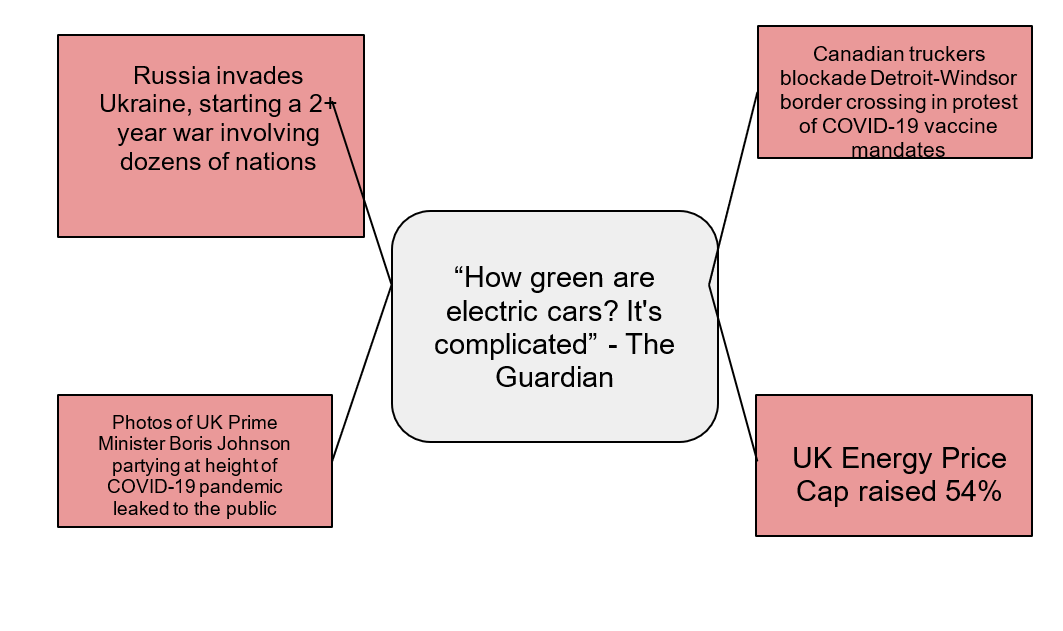
From examining this video in the context of the events occurring at the time of its publishing, both around the world and in its production location in the United Kingdom, we see that early 2022 was a time of energy insecurity and political unrest. UK energy prices were growing, the nation’s leadership was increasingly under scrutiny, and a major war had just begun that would significantly reduce Europe’s access to oil and gas – Russia is a major producer of fossil fuels. There was also an international mobility crisis in North America caused by semi-truck drivers blockading highways at the United States-Canada border, preventing free movement by automobile between the two nations at several key crossings.
Semantic Worknet: “The Future of Electric Vehicles: A Comprehensive Review of Technological Advancements, Market Trends, and Environmental Impacts” by Priyadarshan Patil
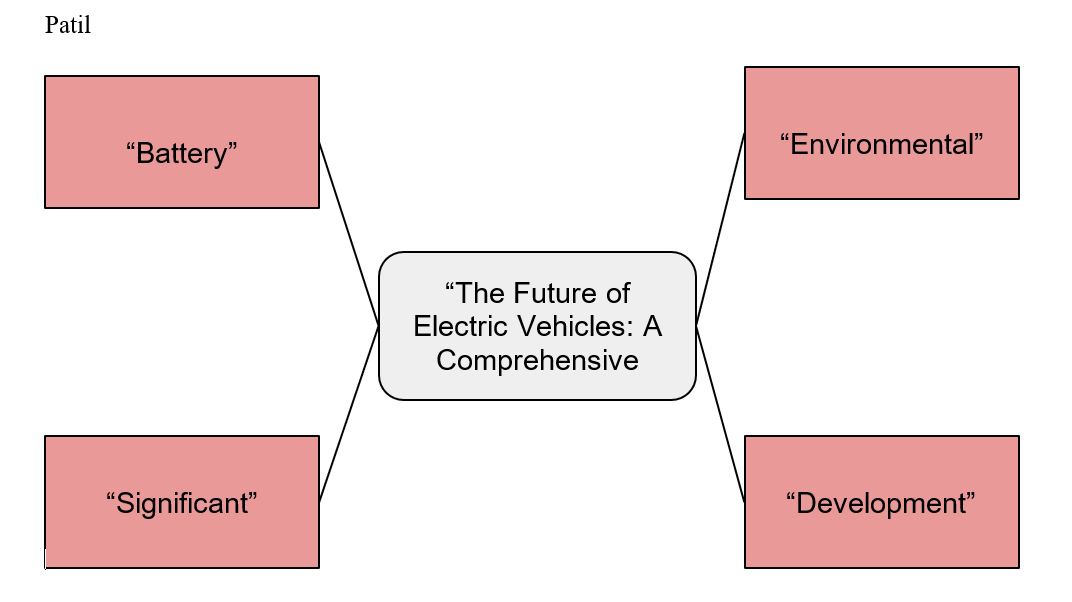
This research paper offers a well-rounded examination of the evolution and future of the electric vehicle industry, providing context for the modern state of the EV industry and touting the benefits of the technology on the environment. It notes not only that EVs are more emission-light than gas-powered automobiles, but that this is central to an increase in demand that they have seen over the past decade or so. It also acknowledges that for EVs to be fully carbon-neutral, they must draw their energy from renewable sources, and use responsible manufacturing techniques for both the vehicles at large and the batteries that power them. In fact, the word “battery” is one of the most prominent in the article; batteries are the central element that make EVs possible, and ensuring that they are reliable and sustainable is key to the success of the industry. Patil discusses responsible battery manufacturing as one of the most important pieces of a sustainable EV market. This ties into the frequently used term “environmental;” one of the main purposes of EVs is to be more environmentally friendly, and this theme is not lost on Patil nor his article. This ties into the usage of the words “development” and “significant,” as the product development process is key to increasing EV sustainability, and both the environmental impacts of conventional cars and the degree to which they can be circumvented by EVs are consequential enough to be described as “significant.”
Bibliographic Worknet: “Reasons for Commuter Rail Electrification: Early 20th Century and Since 2000” by John G. Allen
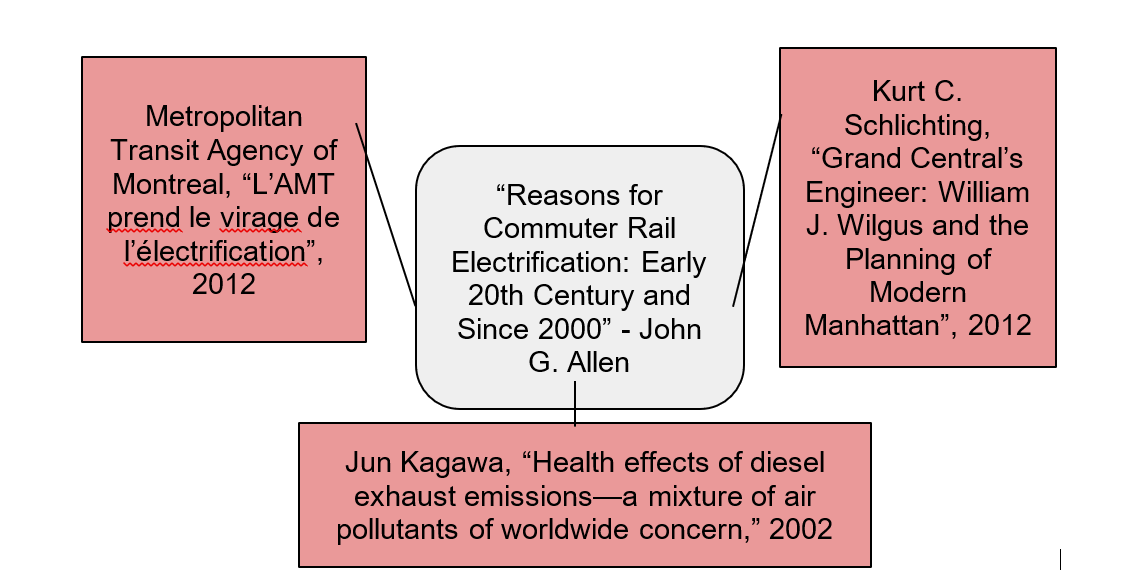
This article, which compares and contrasts past and present reasons for powering passenger rail transportation with electricity rather than diesel, serves overall to argue for the electrification of present services based upon the successes of similar projects from the era in which trains were the dominant transit vehicle in the United States. It discusses historical benefits such as reducing terminal congestion, eliminating pollution from burning fuel, and increasing overall average speed. Allen then suggests that these benefits are still pertinent to rail transportation today; arguably even more so in the case of reduction of emissions from the wider transportation sector.
The information he presents about the climate friendliness of electric rail will be key in comparing it to that of personal electric vehicles. This argument is backed by real-world evidence; Allen cites a Quebec report on the electrification of its Montreal-area RTM commuter rail service, which shows a marked improvement in the urban area’s air quality post-electrification, as a prime example. Further exemplifying the role in which electric rail can play in reducing emissions, Allen touts the story of how smoke from coal-powered trains caused an accident in a New York subway tunnel and how electrified trains prevented such an occurrence from happening again, as told in a 2012 book on the urban planning of Manhattan which he cites. Allen later goes into detail as to why replacing emission-prone diesel trains with electrified rail is an important goal; a 2002 article he cites from a journal on toxicology discusses the impacts of diesel fumes on human health, which he notes near the end of his section on the benefits of electric trains.
Affinity-Based Worknet: “Emerging travel trends, high-speed rail, and the public reinvention of U.S. transportation” by Camille Kamga
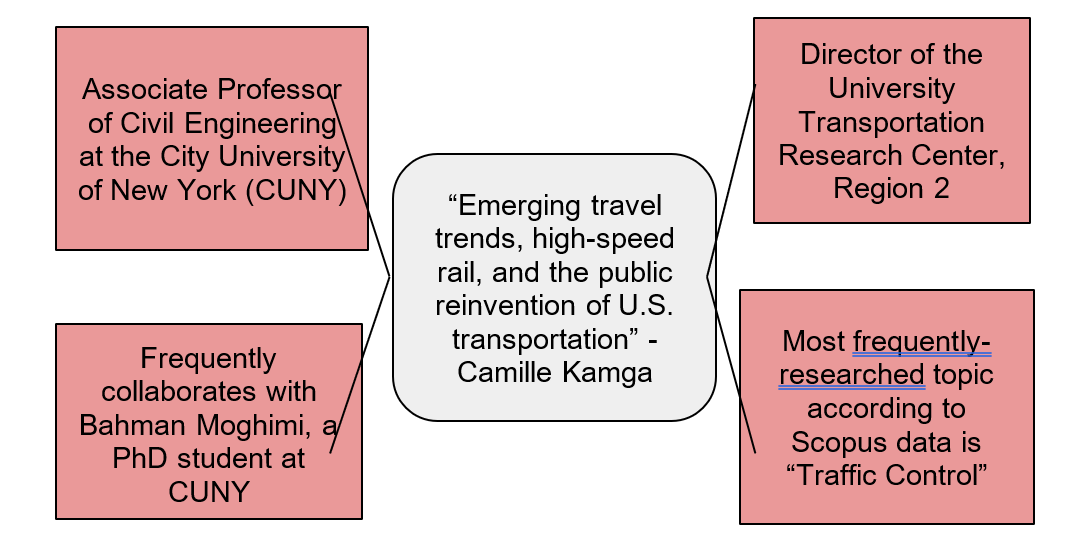
In this journal article, transportation researcher Camille Kamga argues that bringing high-speed rail (HSR) lines to the United States would be a net benefit for society, economy and climate. The technology, according to him, would serve a growing demographic of Americans who view driving as a distasteful activity, and would reduce dependence on automobiles while providing environmentally friendly mass transportation for the country. Pertinent to my project, Kamga projects that HSR will release less direct emissions than air and road travel, and that the urban density promoted by HSR will lower emissions in cities.
Kamga is a significant authority on urban environments and transportation, as demonstrated by his academic background. He is currently a professor at the City University of New York (CUNY), an environment which has no doubt influenced his expertise on rail transportation, given New York City’s status as the nation’s foremost passenger rail – both urban and intercity – transportation epicenter. He is also the director of the University Transportation Research Center of Region Two, one of ten original such organizations founded by the federal government to promote research in the transportation field. The federal government in 2015, when this paper was written, was at the time controlled by the Obama-Biden administration, which often sought to promote rail transportation and sustainability, which could have possibly influenced Kamga’s interest in climate-friendly long-distance passenger rail. He is also a frequent collaborator with younger PhD students at CUNY, suggesting that he is open to more of the newer, progressive ideas on transportation that influenced this paper. He is also a frequent writer on the subject of traffic control, affirming his authority on transportation.
Semantic Worknet: “Comparison of total PM emissions emitted from electric and internal combustion engine vehicles: An experimental analysis” by Sang-Hee Woo, et. al.
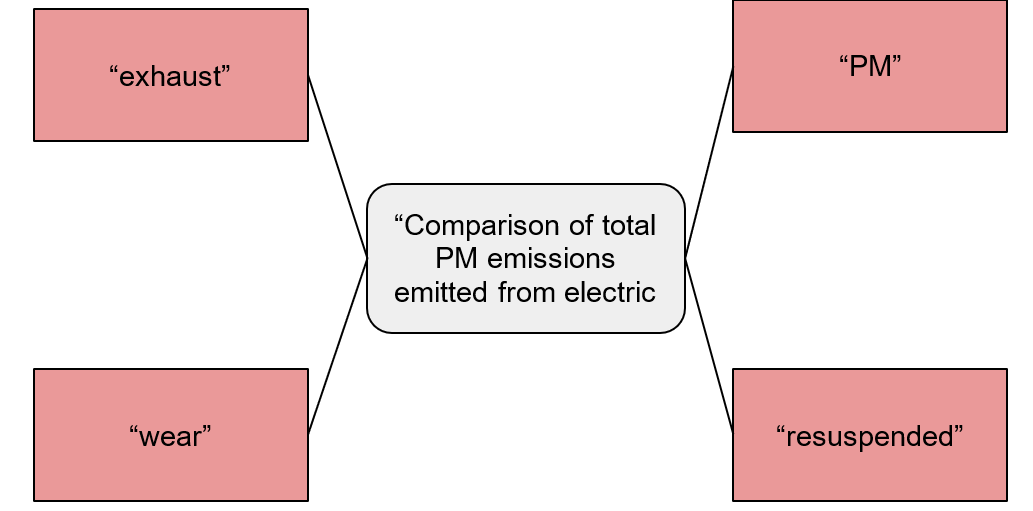
This source from South Korean researchers Sang-Hee, Hyungjoon, Seung-Bok and Seokhwan investigates the output of particulate, non-carbon emissions from automobiles, and seeks to answer whether internal-combustion engine vehicles (ICEVs) or electric vehicles (EVs) release more particulate matter from braking, tire wear and road wear. The experimental study analyzes the particulate emissions from four vehicles, consisting of both ICEVs and EVs, and directly compares them based on the three particulate sources previously described. Although some research has suggested that EVs may have higher particulate emissions, due to their increased weight caused by their significantly heavier batteries, this source contains mixed results: ICEVs actually released more particles from braking, while EVs released more from tire wear, and the data pertaining to road dust emissions was inconclusive. However, the overall combined amounts do show less particulate emissions from EVs. Both types of automobiles were shown to create significant levels of particulate pollution, which serves as evidence against EVs in my paper.
Given that this is a scientific study, most of the language used within it is technical jargon related to the topic it analyzes. “Exhaust” refers largely to tailpipe emissions from ICEVs, pertaining both to the gasses and particulates that exit the car during operation. For the purposes of the study, it was important to separate those particles from those emitted through braking, tire wear and road dust. “PM” is simply an abbreviation for “particulate matter;” using abbreviations to refer to frequently referenced things is a commonplace rhetorical technique used to increase the readability of academic literature. “Wear” is used to refer to the process in which particles slowly fall off of car tires, while “resuspended” refers to dust particles that the force of passing vehicles have lifted off the road and into the air.
Affinity-based worknet: “Green Travel Pledge” from the Rail Delivery Group
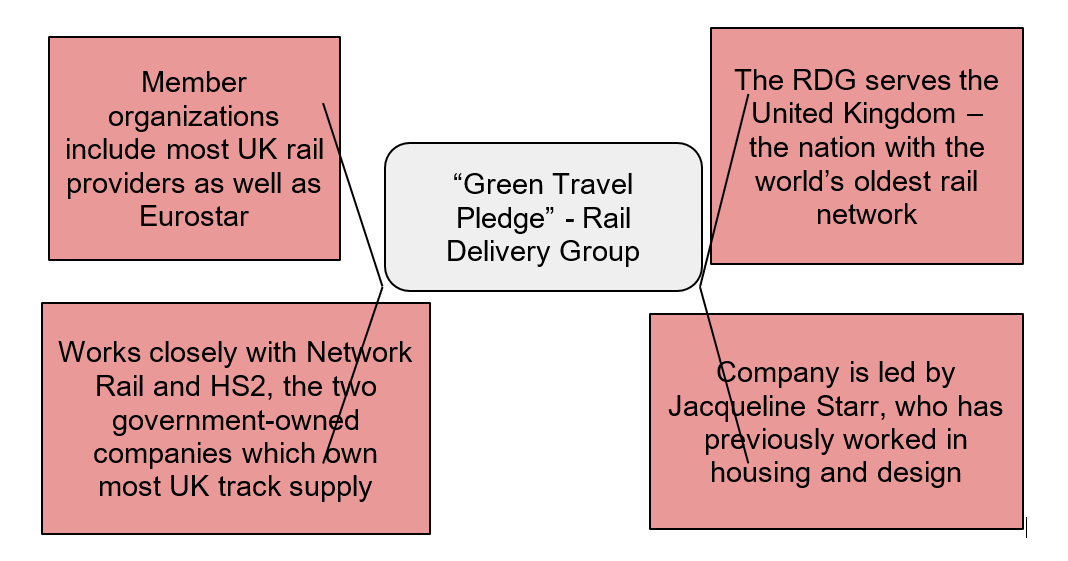
This source is a blog post which serves to summarize a larger set of data from a study carried out by the Rail Delivery Group (RDG), an organization run by passenger rail providers in the United Kingdom that seeks to research and further develop the nation’s rail infrastructure. The wider data set is only accessible to larger organizations, who must apply to access the data, so I have only this summary to work with. Regardless, it shows that across an analysis of 100 travel routes in the UK, passenger rail trips have an average carbon emission output of 4.26 kilograms per passenger, while electric vehicles have an average carbon output of 10.09 kilograms per vehicle, for an average trip. Although the study that determined this figure was conducted by a company with significant ties to the UK rail industry, the post does go into great detail about their research methods, which are scientific and credible. Regardless, it would be helpful to bolster this information with a source less tied to rail industry beneficiaries.
Being managed by the UK rail industry at large, the RDG and its writers have access to a wealth of expertise on passenger rail. Being based in a nation with a particularly rich history of rail usage and being informed by nearly all rail providers in the country, this source draws from a large swath of perspectives on rail travel. Additionally, it has significant government ties, which helps to balance any over-favoring of rail travel, particularly considering the trend towards conservatism in the UK government for most of the RDG’s history. One other aspect of note is that the company’s CEO has previously worked in housing, suggesting a focus on public service.
Allen, John G. “Reasons for Commuter Rail Electrification: Early 20th Century and Since 2000.”
Transportation Research Record, vol. 7, 17 Apr. 2019, pp. 227-238. https://doi.org/10.1177/0361198119840621
"Green Travel Pledge." Rail Delivery Group, National Rail, July 2024,
www.raildeliverygroup.com/uk-rail-industry/green-travel-pledge.html.
Kamga, Camille N. "Emerging travel trends, high-speed rail, and the public reinvention of U.S.
transportation." Transport Policy, vol. 37, Jan. 2015, pp. 111-20, www.sciencedirect.com/science/article/pii/S0967070X14002133.
Patil, Priyadarshan. "The Future of Electric Vehicles: A Comprehensive Review of
Technological Advancements, Market Trends, and Environmental Impacts." Journal of
Artificial Intelligence and Machine Learning in Management, vol. 2, no. 1, 18 Jan. 2018,
pp. 12-23, journals.sagescience.org/index.php/jamm/article/view/63/60.
Sang-Hee, Woo, et al. "Comparison of total PM emissions emitted from electric and internal
combustion engine vehicles: An experimental analysis." Science of the Total
Environment, vol. 842, 10 Oct. 2022, https://doi.org/10.1016/j.scitotenv.2022.156961.
The Guardian. “How green are electric cars? It’s complicated.” YouTube, 24 February 2022,
This topic was much more complex and multifaceted than I originally expected. As a result, while I do feel I have touched on the most essential ideas required to understand my topic, it is not an entirely complete view of all of the nuances that trains and EVs present when examining climate change and transportation. While an overall adequate analysis of my subject, it is worth noting that there is more that could be discussed that I simply did not have the time to incorporate. Ultimately, however, all pieces of writing do have their limitations, as trying to include every last piece of context and information about any one subject or idea is a near-impossible task. Overall, I feel as though this functions as a complete body of work, although it could theoretically be expanded upon.
I initially had difficulty completing this piece. It was very stressful for me, and pulling together all of this information while still filling in gaps as I went was certainly no easy task. I ended up making a round of revisions after a conference with my instructor, and another one after getting formal feedback from him via Canvas; I changed a lot of incorrectly formatted citations, and I added some of my own perspective in areas where that piece of the content puzzle was particularly missing. Fortunately, I did not have to do any research after my initial submission, and I found my overall research process to be very fruitful and efficient. I have now arrived at a paper that has fulfilled my vision for what could be discussed about this subject, and I am very happy with the final result.
A comparison of the environmental impacts and benefits of electric vehicles and rail transportation as a means of reducing pollution
by Skylar Zajac
Abstract
Global warming as a world issue is heavily tied to transportation technology and infrastructure, which accounts for a significant portion of the carbon emissions that cause climate change. When comparing two technologies – trains and electric vehicles [EVs] – on the basis of their capacity to create pollution, including direct carbon emissions and impacts from manufacturing and right-of-way infrastructure, trains emerge as a generally more sustainable option than EVs. Trains notably have a lower release of emissions per passenger per kilometer than EVs, even when including passenger rail powered by diesel as well as electrified rail. Additionally, EVs present multiple unique challenges to their ability to decrease climate change, such as the environmental drawbacks of mining lithium metal required for EV manufacturing and the particulates released into the atmosphere as a result of highway usage.
Introduction
As a factor of climate change, transportation is a major source of carbon emissions (Inventory of U.S. Greenhouse Gas Emissions and Sinks) and is thus an important piece to address when attempting to counter global warming, as this effect is both damaging to the world at large and mainly caused by such emissions (Stocker et al). Trains have long been a factor in the transportation landscape (Allen) and have more recently emerged as a more environmentally friendly transportation mode than the dominant internal-combustion engine vehicle [ICEV] (Kamga), while electric vehicles [EVs], private automobiles powered by electricity, have grown in popularity compared to their ICEV counterparts since the 1990s (Patil). This paper seeks to analyze the effects of electric vehicles (EVs) and trains upon the environment in several ways, including direct carbon emissions from energy consumption, impacts related to manufacturing, and impacts resulting from right-of-way construction and operation. Based upon these factors and their given subtopics, it may be reasonably determined that one of these two transportation devices are better for the environment than the other; this knowledge may be useful in technological development, policy formulation, and other areas.
An Overview of Carbon Emissions In Relation to Transportation
Carbon dioxide [CO2] and other greenhouse gas emissions are a crucial element in understanding the environmental impact of transportation, and for that matter, all sectors of industrialized life. The scope of this paper is not to describe in full the sources and causes of carbon emissions and their effect on the environment, but for the purposes of describing why both EVs and passenger rail are relevant in today’s transportation culture, it is essential to note that the Earth’s climate has been warming at an unprecedented rate (Stocker et al), and that, as a report from Our World in Data states, “carbon dioxide emissions are the primary driver of global climate change” (Ritchie & Roser para 1). Furthermore, much of these emissions come from highly industrialized and developed regions of the world, such as Europe, China, and the advanced North American nations of the United States of America and Canada (Ritchie & Roser). Global warming, caused by these carbon emissions, is in turn responsible for such environmental calamities as ocean warming and glacier and ice cap melting, which in turn cause sea levels to rise, as well as an overall decrease in average precipitation (Stocker et al).
With carbon emissions being such a dramatic and existential threat to the global climate, it is expected for the transportation sector to adapt to the situation and field options that release less carbon dioxide into the atmosphere. The automobile industry has invested significantly in producing EVs, which are powered by electricity rather than the traditional gasoline or diesel fuel used in ICEVs (Patil), with the goal and expectation that these EVs will produce less emissions per trip than automobiles powered by fossil fuels. Meanwhile, passenger rail, which once dominated the transportation sector globally before automobiles began leading the transportation field, has been re-emerging as a popular mode of transportation, especially among younger people (Kamga). Both of these transportation options release far less carbon emissions than ICEVs (Ritchie), and could therefore decrease the carbon footprint of passenger transportation by increasing their respective shares of that market, ultimately slowing the effects of global climate change.
Direct Carbon Emissions
As machines, both cars and trains require a power source to transport passengers. Both modes have been historically powered by fossil fuels: conventional cars typically use gasoline (Patil), while the rail industry has vastly favored diesel since the mid-20th century (Allen). The impact of this reliance on fossil fuels is profound: the United States Environmental Protection Agency’s [U.S. EPA] Inventory of U.S. Greenhouse Gas Emissions and Sinks discloses that between the years 1990 and 2022, transportation accounted for roughly 28% of all carbon emissions in the U.S., with indirect emissions from electricity accounting for less than 1% of this amount. This environmental impact is a major reason why both EVs and electrified rail have been growing in favorability as transportation methods, as they lack this direct-from-tailpipe environmental impact.
This is not to say that transportation powered by electricity produces zero emissions whatsoever. According to the U.S. EPA, electricity generation accounted for a staggering 25% of carbon emissions in the United States, a major emission-producing nation, between 1990 and 2022, although this figure is declining. Indeed, while much lower than that of fossil fuel-powered internal combustion engine vehicles (ICEVs), the environmental impact of EVs from energy consumption has been found to be significant, producing several kilograms of carbon dioxide per passenger per trip across multiple examples, according to an experimental study from the Rail Delivery Group. These emissions come from the usage of nonrenewable electricity sources, chiefly from burning fossil fuels (Patil). The impact of this effect is highly regional and depends on which forms of electricity generation are commonly utilized in a given area. A prime example is that in Norway, most energy is sourced from hydroelectric power, making EV power potentially 100% green; while in China, a majority of electricity is produced from burning coal (The Guardian). Electricity is electricity no matter how it is used, so this fact may be extrapolated to the use of energy in electrified rail.
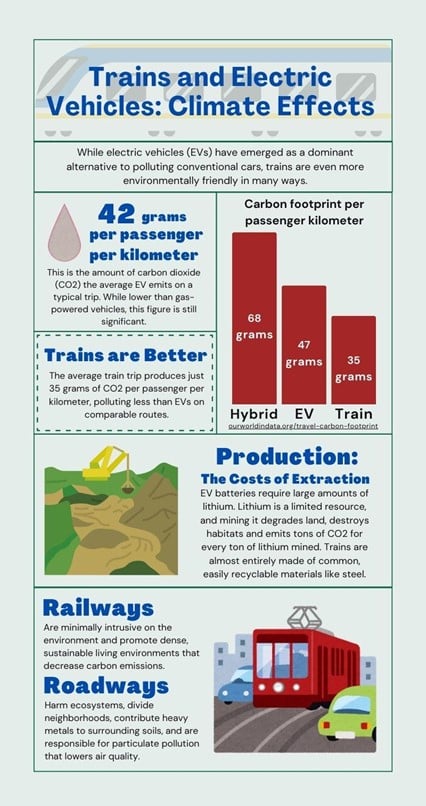
While rail transportation is not emission-free, multiple studies have found that even while including both diesel-powered and electrified rail, it still releases less emissions per passenger per kilometer than EVs. For instance, the Rail Delivery Group study mentioned previously found that in all four intercity trips it analyzed, trains created significantly less carbon dioxide emissions than EVs along the same routes. Additionally, as reported by Our World in Data researcher Hannah Ritchie, the United Kingdom government has found that gasoline-powered automobiles produce an average of 170 grams of CO2 per passenger per kilometer, with the country’s National Rail passenger train service only producing an average of 35 grams of CO2 per passenger per kilometer. Overall, rail transportation has strong potential to further lower transportation emissions, but is so far imperfect in terms of releasing as few emissions as possible, with diesel trains releasing an average of 69 grams of CO2 per passenger-kilometer and electric trains releasing an average of 54 grams of CO2 per passenger-kilometer: however, this may be improved by increasing electrification of existing rail networks (Givoni et al), and by building up renewable energy infrastructure (Ritchie & Roser, Inventory of U.S. Greenhouse Gas Emissions and Sinks). In conclusion, both trains and EVs may theoretically be powered by completely renewable energy, but it depends on the power grid that supplies it. We cannot conclude that either transportation mode has a complete advantage in minimizing environmental impact by this metric, but data does suggest that under current circumstances, rail transportation is more effective at lowering carbon emissions than EVs.
Effects of Manufacturing and Sourcing Materials
Analyzing the environmental impacts of manufacturing EVs and trains is fairly complicated, and research into the latter matter in particular is limited. With that being said, however, EV production has one crucial aspect which makes its effect on the climate significant: the batteries which power the vehicles. Sourcing resources to manufacture EV batteries is a process with a very high environmental cost. Priyadarshan Patil, a business researcher at the University of Texas-Austin, states that "One of the biggest challenges [of EV production] is the limited availability of raw materials, particularly cobalt and lithium. The production of lithium-ion batteries requires large amounts of these materials, and their extraction can have negative environmental impacts (14). Lithium mining and refining in particular is extremely problematic for the environment. Extraction processes release a staggering amount of carbon into the atmosphere: five to fifteen metric tons for every metric ton of lithium mined (The Guardian). The environmental impacts of extracting lithium and other metals and minerals essential for the production of EVs stretch far beyond carbon emissions, with water and energy use for mining procedures and land degradation (Patil) being crucial concerns. Additionally, lithium is not usually refined where it is mined, and the material typically needs to be shipped over long distances from mines, to refineries, and finally to automobile factories, creating additional emissions from ship operations (The Guardian). All of these environmental costs add up, and they show that the EV industry is surprisingly ill-suited at countering global climate change.
Once materials have been sourced, batteries and other EV components must be produced, which leads to additional impacts on the environment. According to Massachusetts Institute of Technology climate writer Andrew Moseman, constructing a new EV can produce up to 80% more emissions than producing a new ICEV, with production and disposal already accounting for around 9% of an ICEV’s lifetime emissions. Disposing of batteries may also pose environmental hazards; however, this effect may be mitigated with proper disposal and recycling procedures, the development of which could serve to lower the overall environmental impact of EVs (Patil). Still, it remains easier to simply implement the rail technology that already exists to lower transportation emissions, rather than trying to solve the problem of battery recycling.
Trains and rail infrastructure have climate impacts that are important to consider. As analyzed by a group of German researchers on behalf of the International Union of Railways, manufacturing and maintaining a passenger train costs several thousand kilograms of carbon per year (Tuchschmid et al). As with manufacturing any industrial product – including cars, as noted above – building a passenger train unfortunately results in carbon emissions that must be accounted for in a holistic analysis. However, rail gains a crucial advantage in not sharing the climate-damaging material requirements that EVs have. Electric trains are not typically powered by batteries; instead, energy is supplied externally, either through overhead wires or from a current-filled third rail along the track (Allen). These components are typically made of steel (Tuchschmid et al), which is very easily recyclable (American Iron and Steel Institute), while the technology for efficiently recycling the climate-intense lithium used in EV batteries is still in development, and an overall extremely complex and delicate process (Patil). Overall, while a direct comparison of the carbon emissions of manufacturing EVs and trains is difficult to make, it can be definitively concluded that EVs have unique challenges in power source manufacturing that trains simply do not possess.
Environmental Effects Due to Operation and Right-of-way
Whether they are powered by fossil fuels or electricity, all passenger automobiles typically occupy the same road systems, and all passenger trains run on the same basic sort of track infrastructure. Building roads and rails takes up land, inherently disturbing natural ecosystems that previously existed there (Walia et al, Lucas et al). Given this knowledge, it is important to analyze the environmental impacts of the right-of-ways that these transportation modes run on to gain a complete understanding of how transportation affects the climate. Additionally, it is also worth investigating how these different transportation modes influence the built environment around them and how those effects in turn affect the environment as well.
Highways, the arteries of automobile operation, have several distinct effects on the environment. A staggering amount of energy is consumed during construction; manufacturing of materials and operation of machinery each took up hundreds of tons of oil equivalent during the overall construction process, as was experimentally determined in a study of the life cycles of highways in Korea (Kwangho et al). This results in significant amounts of damaging emissions: multiple tons of several different greenhouse gasses throughout the construction cycle (Kwangho et al, Bilgili et al). In addition to the CO2 and other gasses associated with climate change released from consuming all of this energy, the removal of plant life required to build these highways additionally exacerbates the issue, greatly increasing the concentration of greenhouse gas carbon monoxide [CO] in the atmosphere (Walia et al). Plants must also be cleared to construct railways, creating similar effects; additionally, residual soil pollution can continue to affect local plants in both cases (Lucas et al, Walia et al). This effect is often less apparent in railways, however, as they typically have a smaller and more narrow physical profile than roadways. Dust and particulates are also released into the atmosphere during highway construction, via “activities like land clearing, ground excavation, cut and fill operations and the construction of a particular facility itself” (Walia et al). Some of these particulates may resettle onto the road surface over time, only to be “resuspended” in the surrounding air (Sang-Hee et al).
Railways also have environmental effects from construction. If improperly managed, the construction process can leave long-lasting detrimental impacts on the soil around the railway, such as erosion (Lucas et al) and heavy metals (Bilgili et al). Toxic metals such as cadmium and arsenic may also be released into surrounding waters during track construction (Bilgili et al); metals which could potentially harm wildlife that relies on these water sources for drinking purposes and ultimately make their way into human agriculture (Walia et al). Railway construction, however, does have a significant advantage over highway construction when it comes to carbon emissions: a life cycle analysis of a highway and a railway between two cities in Turkish Anatolia determined that “considerably higher greenhouse gas emissions occur during highway construction than railway construction”; the same study also determined that while still significant, railway construction releases less heavy metals into the environment than highway construction, with the exception of mercury (Bilgili et al).
In addition to particulates generated during roadway construction (Walia et al 509), the operation of EVs on roads also generates several forms of particulate pollution, as is the case with all automobiles. A study conducted by four researchers at the Korean Institute of Machinery and Materials found that a wide variety of cars, including several EVs, released particulates into the air via breakdown of tires and brake pads, as well as from the uplifting of dust settled onto road surfaces (Sang-Hee et al). While EVs typically have a somewhat lower impact in this regard, it is still a concerning effect of these vehicles upon the environment. These particulates negatively impact atmospheric quality (Sang-Hee et al) and should be considered when evaluating the impact of EVs on the climate.
One other aspect of note is how rail and road infrastructure impact urban density. Constructing passenger rail hubs promotes density in cities, leading to lower car usage, which in turn increases activity in walking, cycling and transit use, all resulting in lower carbon emissions (Kamga). Since both EVs and ICEVs release some form of carbon emissions, this shift is extremely likely to decrease the emission output of a given urbanized area. Encouraging a more compact land form for urban living space, by way of making things closer together, could theoretically decrease the need for extensive highway construction, which has several negative impacts as previously described (Kwangho et al, Bilgili et al, Walia et al).
When comparing roadways and railways head-to-head, a number of environmental impacts emerge in both, especially during construction. However, it is overall apparent that rail track outperforms highway infrastructure in a number of ways, decreasing carbon emissions, heavy metal pollution and overall water pollution (Bilgili et al). One potential problem with rail transportation is that the presence of some heavy metals in soil and water, namely arsenic and mercury, do actually increase over a mode shift from highway to rail (Bilgili et al). However, it should be noted that impacts on soil from railway construction can be mitigated by cleaning railway ballasts (Lucas et al); further research yielded no equivalent procedures for preventing soil pollution from highways. When these pollution advantages are combined with the promotion of density brought on by passenger railway construction and its corresponding positive effects, it provides a strong case for rail’s superior sustainability.
Conclusion
While trains and EVs are both significant improvements over gasoline-powered automobiles when it comes to countering climate change, EVs seem to have very few clear advantages over trains in terms of environmental benefits. Throughout this paper, the evidence has all pointed to rail transportation releasing fewer damaging emissions per passenger per kilometer, resulting in a drastic difference in air pollution output between the two modes that greatly favors trains. In terms of operating infrastructure, or right-of-ways, railways also produce less soil and water pollution than roadways. Rail transportation further benefits from not requiring uniquely environmentally challenging lithium mining operations, as well as not releasing a substantial amount of particulate emissions from road dust, both of which are major issues that plague the sustainability record of EVs. Based on the evidence presented, it can be concluded that railways should be prioritized when considering a climate-conscious transportation system.
Allen, John G. “Reasons for Commuter Rail Electrification: Early 20th Century and Since 2000.”
Transportation Research Record, vol. 7, 17 Apr. 2019, pp. 227-238. https://doi.org/10.1177/0361198119840621.
Bilgili, Levent, et al. "Evaluation of Railway Versus Highway Emissions Using LCA Approach
Between the Two Cities of Middle Anatolia." Sustainable Cities and Society, vol. 49,
Aug. 2019, pp. 1-7, https://doi.org/10.1016/j.scs.2019.101635.
"Data Highlights 1990-2022." Inventory of U.S. Greenhouse Gas Emissions and Sinks, Apr.
2024, pp. 1-10, www.epa.gov/ghgemissions/data-highlights.
Givoni, Moshe, et al. "Are Railways Climate Friendly?" Built Environment, vol. 35, no. 1, 1
Mar. 2009, pp. 70-86, https://doi.org/10.2148/benv.35.1.70.
"Green Travel Pledge." Rail Delivery Group, National Rail, July 2024,
www.raildeliverygroup.com/uk-rail-industry/green-travel-pledge.html.
Kamga, Camille N. "Emerging Travel Trends, High-speed Rail, and the Public Reinvention of
U.S. Transportation." Transport Policy, vol. 37, Jan. 2015, pp. 111-20,
www.sciencedirect.com/science/article/pii/S0967070X14002133.
Lucas, Priscila S., et al. "Railway Disturbances on Wildlife: Types, Effects, and Mitigation
Measures." Railway Ecology, 19 Sept. 2017, pp. 81-99,
https://doi.org/10.1007/978-3-319-57496-7_6.
Moseman, Andrew. "Are Electric Vehicles Definitely Better for the Climate than Gas-Powered
Cars?" Ask MIT Climate, Massachusetts Institute of Technology, 13 Oct. 2022,
climate.mit.edu/ask-mit/are-electric-vehicles-definitely-better-climate-gas-powered-cars.
Park, Kwangho, et al. "Quantitative Assessment of Environmental Impacts on Life Cycle of
Highways." Journal of Construction Engineering and Management, vol. 129, no. 1, 15
Feb. 2003, pp. 25-31, https://doi.org/10.1061/(ASCE)0733-9364(2003)129:1(25).
Patil, Priyadarshan. "The Future of Electric Vehicles: A Comprehensive Review of
Technological Advancements, Market Trends, and Environmental Impacts." Journal of
Artificial Intelligence and Machine Learning in Management, vol. 2, no. 1, 18 Jan. 2018,
pp. 12-23, journals.sagescience.org/index.php/jamm/article/view/63/60.
Ritchie, Hannah. "Which Form of Transport Has the Smallest Carbon Footprint?" Our World in
Data, 30 Aug. 2023, ourworldindata.org/travel-carbon-footprint.
Ritchie, Hannah, and Max Roser. "CO₂ Emissions." Our World in Data, June 2020,
ourworldindata.org/co2-emissions.
Sang-Hee, Woo, et al. "Comparison of Total PM Emissions Emitted from Electric and Internal
Combustion Engine Vehicles: An Experimental Analysis." Science of the Total
Environment, vol. 842, 10 Oct. 2022, https://doi.org/10.1016/j.scitotenv.2022.156961.
Stocker, Thomas F., et al. "Technical Summary: Climate Change 2013: The Physical Science
Basis." Assessment Report of the Intergovernmental Panel on Climate Change, vol. 5,
2013, pp. 35-58, www.ipcc.ch/site/assets/uploads/2018/02/WG1AR5_TS_FINAL.pdf.
"Sustainability in Steel Recycling." American Iron and Steel Institute, Oct. 2024,
www.steel.org/wp-content/uploads/2024/10/Steel-Sustains-in-Recyclability-Fact-Sheet-U
The Guardian. “How Green are Electric Cars? It’s Complicated.” YouTube, 24 February 2022,
https://www.youtube.com/watch?v=Chp9VlSs25c.
Tuchschmid, Matthias, et al. "Carbon Footprint and Environmental Impact of Railway
Infrastructure." International Union of Railways, 20 Oct. 2011, pp. 18-29, uic.org/IMG/pdf/uic_rail_infrastructure_111104.pdf.
Walia, Kashish, et al. "Environment Impact Assessment of Highway Expansion – A Review."
Current World Environment, vol. 12, no. 3, 16 Dec. 2017, pp. 507-14, https://doi.org/10.12944/CWE.12.3.04.
I believe that this infographic stands well as a finished product, but as always, there is room for further development and tweaks. I wrote most of my information and created the graph I used before peer review, and updated the visuals significantly following the review session. I received a lot of great feedback on color contrast and visual flow; an earlier version of this project featured a monochromatic green color scheme, which helped the visual rhetoric of environmentalism that I was aiming for but was ultimately uninteresting visually. There is potential for further additions, such as some adjusting of my color scheme, or maybe even the inclusion of another graph. However, I do not view these modifications as necessary or even majorly beneficial: there is always a risk of having too much information when working with such a concise format.
Sample Student Portfolio 3