Chapter 3: Genre Awareness

While every writing scenario is different, there are many kinds of rhetorical situations that other writers have already addressed, and you can be more effective if you know which choices often function well in those circumstances. This is why it’s important to have an understanding of genre.

What is Genre?

A genre is a type of communication that comes up repeatedly and has recognizable features. These features are called conventions. One common definition is that genres are “typified rhetorical actions based in recurrent situations” (qtd in Devitt 82). That is, some rhetorical situations are similar to one another. Because of those similarities, people develop similar uses of rhetoric to navigate those situations.

In nonfiction writing typical of academia, there are different genres of writing with recognizable forms. Many different features can help identify a writing genre, including:

  • subject matter
  • stylistic conventions
  • formatting
  • publishing/review processes

Since genre is a response to a specific rhetorical situation, another way to identify genres is to think about the relationships between the features of a text and its situation. For example, a journal article and a conference presentation are both accepted ways to communicate scholarly research, but there are some key differences in features and situation between the two genres. A resume with a cover letter are common genres used to apply for a job, but each document serves a slightly different purpose even if the audience is the same. Developing an understanding of genre is also helpful to you as a reader. As we will explore more in Chapter 4, it’s important to understand different types of sources when you are doing research.

Genres in nonfiction writing--particularly for different purposes during college--include some of the following: 

  • reports
  • case studies
  • argumentative or analytical essays
  • proposals
  • technical manuals
  • reflective journals
  • business plans
  • cover letters
  • resumes
  • letters
  • user manuals
  • product descriptions
  • briefs
  • memos
  • posters
  • grants
  • presentations and videos
  • white papers
  • policy analysis papers
  • literary analysis

In other words, you will find yourself writing for many different purposes and audiences, but genres often have conventions (typical elements such as content, organization, modes or media used, etc.) that can provide you with guidance about what readers expect from this text. 

Genre Analysis

Learning to identify and adapt to genre conventions for the different writing tasks you encounter is one of the most important skills you will develop as a college writer. Sometimes, expectations for a type of writing will be explicitly stated, for example, on an assignment sheet or on a submission guidelines page for a journal. It is also important to ask your audience or other stakeholders about their expectations. But beyond this, the best way to identify conventions of an unfamiliar genre are to look at examples of texts written in that genre. When possible, try to find several examples of a genre you want to know more about, since having just one or two examples can make it hard to know what features are genre conventions and what features are part of the author's style or the unique situation of that text. When you've found some examples, ask yourself: what features do they share?

This kind of activity is called genre analysis, and doing this will help reveal genre conventions that aren’t stated explicitly but may still be expected.

Question for Genre Analysis*

  1. Questions about situational elements: What conditions (situations) call for the genre? What prompts this sort of document to be written?
  2. Questions about content: What sort of content is typically contained in this genre? What do these texts tend to talk about or say?
  3. Questions about form: What does this genre look like? How is it organized? What language does it use? What tone does it take?
  4. Questions about the organizing principle: What makes this genre what it is? What are the common features of the genre? If you took out a certain characteristic, would it still be recognizable as this genre?

*adapted from Wardle & Downs

You can refer to the introduction to familiarize yourself with the genres that you will be asked to create in this class; for genres you might encounter in the future, see Chapter 8.

Conventions of Academic Writing

In addition to being familiar with the conventions of specific genres, there are some principles you may want to keep in mind that apply to academic writing more generally. While the writing you do will vary in different classes and in the disciplinary approaches you encounter, learning about the conventions of academic writing will provide you with a starting point that you can apply and refine in new situations. Additionally, being familiar with these conventions will help your understanding as you read research papers because you can recognize the moves the authors are making.

Researchers in writing studies have studied conventions of academic writing genres have found some common features (Thonney). Often, disciplinary writing across genres does the following:

  1. Situating Your Position: A “conversation” is a common metaphor for academic writing—this refers to the way a variety of perspectives influence how an informed and engaged community views a subject. In this metaphor, different researchers are contributing to an ongoing (long-term) "conversation" when they develop a research study and publish their findings. They must usually connect their own work to previous research, which is one way of listening (and responding to) other researchers and members of a field. Demonstrating possible relationships between sources you have found is one of the main objectives of academic research, and it is essential to explain how your research relates to previous research on the topic.
  2. Citation and Attribution: This is discussed in more detail in Chapter 7, but citation and attribution are more than just mechanical aspects of academic writing; they are essential parts of “mapping the conversation.” That is, your in-text citations signal to the readers the source of your information and the relationships they have to each other.
  3. Provide a Directional Statement: A useful way to help your reader is to include a specific statement of purpose. A purpose statement announces the scope and direction of the paper. It usually appears toward the end of the introduction, and it can be several sentences. Common beginnings include “this paper examines…,” “the aim of this paper is to…,” and “the purpose of this essay is to…”. In many academic genres, you will need to have an idea of how your research is contributing to the conversation on your topic, and this should be clearly stated in your writing.
  4. Preview the Text: Many experienced academic writers preview the paper’s structure with a statement that indicates what readers can expect. For example, “First, I provide an overview of recent research on urban sustainability from urban planning, environmental science, economics, and sociology. I then focus on the synthesis of these findings, combining perspectives from various fields to provide a holistic understanding of the barriers to sustainable development.” In addition, many academic writers also include preview and review sentences at various points in their writing. They pause within their articles to indicate what topic is coming next, and conclude by restating the importance of their research and providing a summary of what they’ve discussed.
  5. Mechanical Emphasis and Formatting: Another feature of academic articles is that they include descriptive titles and headings. This title communicates a lot of information to your reader: your purpose, topic, and perspective. You will also notice that almost all academic articles include headings and subheadings to announce the topic of sections. Incorporating these into your writing is another way to make your paper’s structure clear. In college, as your writing gets longer and more complex, using headings becomes increasingly important to make it easier for readers to navigate your writing.
  6. Acknowledge That Others Might Disagree with Your Position: Scholars often use qualifiers or hedges in their writing. These are words or phrases that are added to a claim to modify its meaning, such as “probably,” “possibly,” “maybe,” and “it seems.” Hedging is a way to make your claims more accurate—as you are writing, it is important to distinguish what constitutes a statement of “fact” and to differentiate between generalities and specifics.

Other Features of College Writing

Some of the challenges that new college writers face are related to entering a new discourse community and kinds of readership, which requires developing new ways of writing, thinking, and researching. Consider some of these other features of college writing:

  • Writing with authority: Different discourse communities and academic disciplines have distinct approaches to writing with authority. For instance, Moxley notes that in the field of medicine, a research article may become authoritative if it follows ethical research guidelines and provides a comprehensive analysis of the results. On the other hand, in the legal field, lawyers create authority in their writing by strictly adhering to statutes and legal precedents. However, following the general conventions of academic writing will help your work become authoritative across contexts.
  • Making Decisions about Voice: Depending on the style you are writing in, the first person (using I) could be something you want to avoid or something that is accepted. There are some assignments that your instructors will assign that will exclusively ask you to write in the first person, such as reflective or narrative writing. However, different instructors may have different views on where, when, and how to write in the first person, so be sure to follow your instructor's directions and pay attention to how experts in the field you are studying make choices about perspective.
  • Ownership and Intellectual Engagement: As a student, ownership and involvement with your work will help you learn. Additionally, your instructors are looking for critical thinking, which is demonstrated when you synthesize concepts, and you have something meaningful to add.
  • Using Discipline-Specific Vocabulary: Common in college writing is the use of jargon (words or expressions that are used by a particular group and are difficult for others to understand) or technical vocabulary. Writers use this language in order to convey specialized meanings and indicate one’s membership in an academic community. Scholars are sometimes criticized for using needlessly complicated vocabulary, but jargon can be useful because it enables writers to clearly communicate concepts without needing to spend time explaining them. As you write in academic and specialized contexts, it makes sense for you to employ technical terminology, because you will be working with ideas, findings, and data related to a specific area. But this does not mean that you should use "big words" just for the sake of using them, and you should be cautious about using terms if you’re unsure what they mean.

The Burkean Parlor

The Burkean parlor is a metaphor introduced by rhetorician Kenneth Burke that describes how academic conversation works:

"Imagine that you enter a parlor. You come late. When you arrive, others have long preceded you, and they are engaged in a heated discussion, a discussion too heated for them to pause and tell you exactly what it is about. In fact, the discussion had already begun long before any of them got there so that no one present is qualified to retrace for you all the steps that had gone before. You listen for a while until you decide that you have caught the tenor of the argument; then you put in your oar. Someone answers; you answer him; another comes to your defense; another aligns himself against you, to either the embarrassment or gratification of your opponent, depending upon the quality of your ally's assistance. However, the discussion is interminable. The hour grows late, you must depart. And you do depart, with the discussion still vigorously in progress."

Analyzing Multimodal Elements/Creating Multimodal Project

What is multimodality?

During the course of your academic career, your instructors may ask you to design a multimodal project. These projects can come in a wide variety of genres. For example, you may be asked to design or develop an infographic, poster, flyer, brochure, podcast, video, or slide deck—just to name a few. 

Multimodality comes from the words “multi” and “modal,” where "modal" means modes or stylings. A mode is an elemental aspect of a text. Often, distinctions are made between five different modes of communication.

The Five Modes of Communication
linguistic Language is used with written symbols (such as the Latin letters and Arabic numerals used in this text) or spoken out loud
visual Elements that are observed through sight
audio Elements that are related to sound
spatial How elements are arranged in relation to one another
gestural Gestural communication uses visual and audio elements to convey movement for the audience observing the text

Any multimodal text uses at least two or more of these elements. Even black-and-white text is arguably multimodal, as it uses colors to contrast the text and is usually arranged in specific ways (such as using paragraphs, margins, line spacing, and other elements) to facilitate audience interpretation.  Consider the following regarding visual rhetoric, or the way that images and other nonalphabetic text can be designed with purpose: 

  1. When you are designing your multimodal projects, you may want to consider using visual rhetoric to help communicate your message through visual aids such as images or putting emphasis on certain words, like making them bold or using a contrasting color on the font you choose to use.
  2. Think about how you approach your overall design in terms of layout and other stylistic elements that not only help communicate your message, but also invoke persuasive effects on your audience.
  3. Content becomes just part of the rhetorical piece as a whole; there are now other contexts to consider when digesting a visual rhetorical piece. Sometimes, the content itself could be elevated by the design choices, such as how a title is bolded or italicized to draw attention, or how a picture summarizes three paragraphs’ worth of information. What matters is how visual rhetoric works within its different modes.
Multimodal Activity: Remixing the Rhetorical Situation

Goal 

Rhetorical knowledge: build on your knowledge of the rhetorical situation (audience, purpose, and context).

Directions

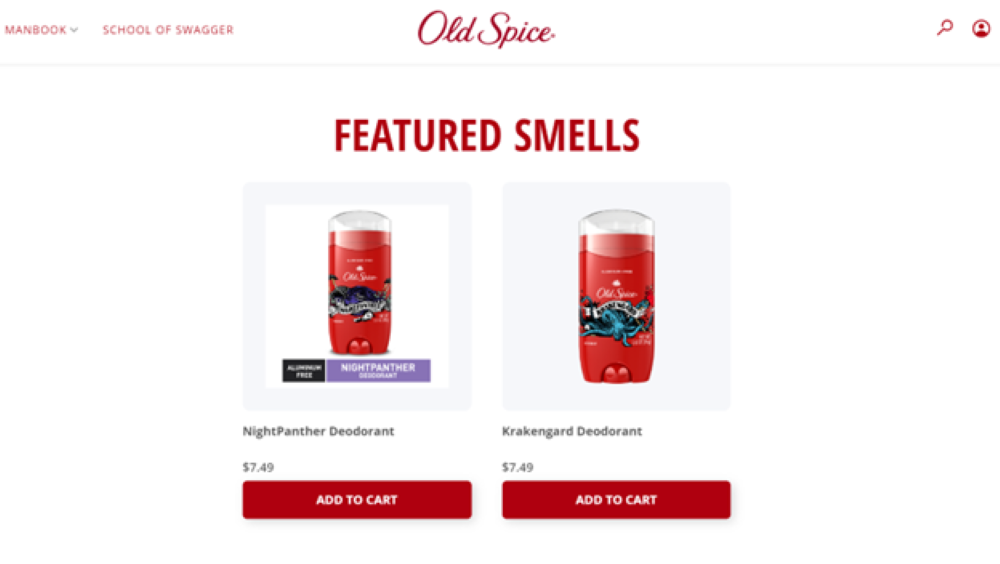
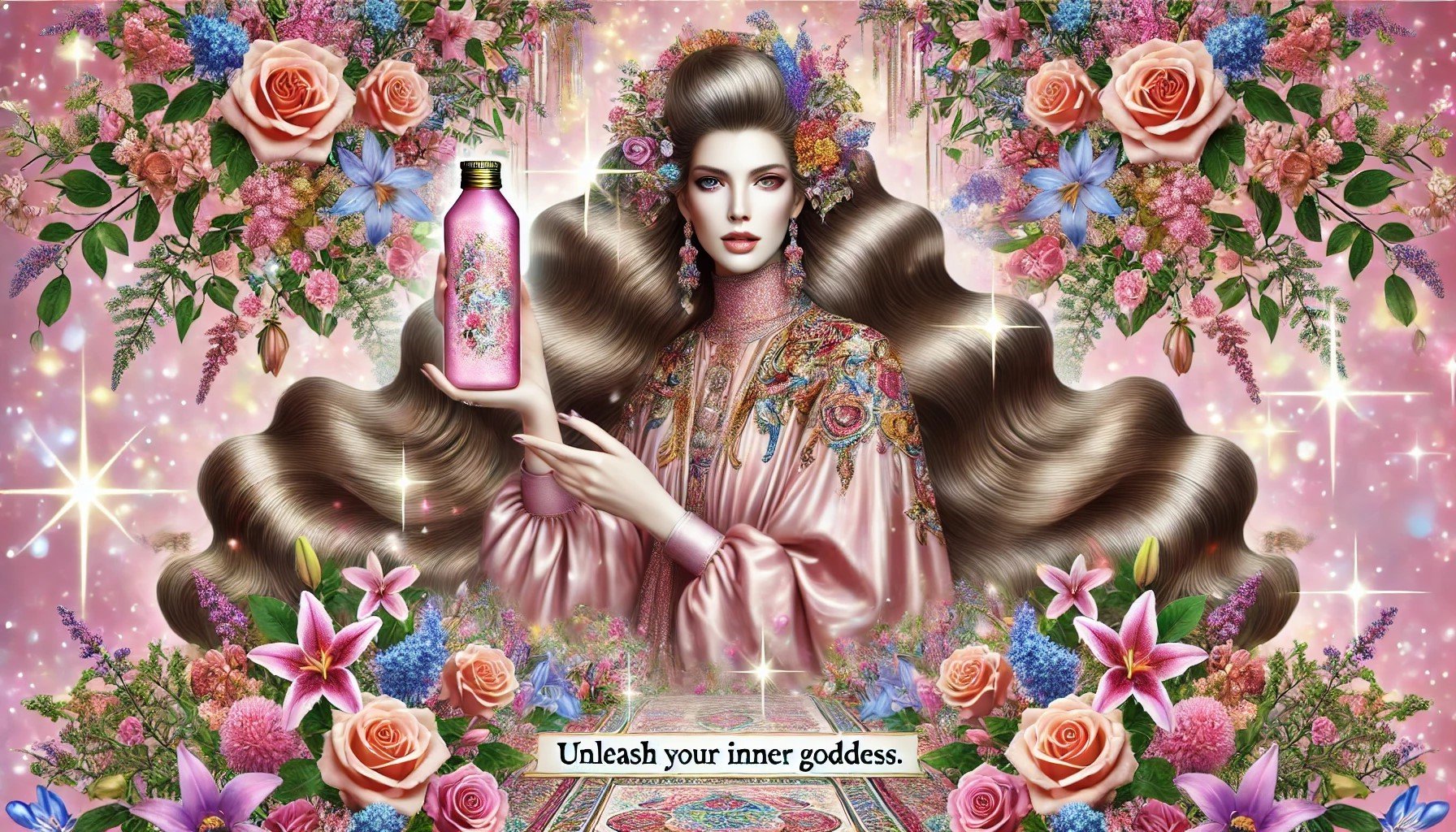
Take a look at the images below. You will see that they are targeted towards gender-specific audiences. Some are actual advertisements or webpage and some are created with Generative AI. 

Step 1: After you have examined both images closely, analyze each image's rhetorical situation individually.

  • Who is the audience?
  • What is the purpose?
  • What is the context?

Step 2: For the second part of this task, think about and write down some ways you could remix the purpose and context to a gender-neutral audience.

Step 3: Now that you have an idea about how you can remix those images, redesign them using art materials such as color markers and paper, or create something using design software such as Canva.com, Google Draw, or something you’re familiar with.

Step 4: Your instructor may ask you to share your remixed images. You should be prepared to discuss the rhetorical strategies you used to transform the images into one inclusive image.

Image 1: 

Image 2: 

How Might You Use Multimodal & Visual Rhetoric

Senior design projects that engineering students do in their final years require a conference-style poster to present to investors. This poster will need to communicate a similar amount of data as a 15–20 page report would, except with visual and spatial cues to accentuate details in the project (such as having graphs organized together and possibly overlaid to demonstrate data trends).

If the poster and presentation given by the students is satisfying enough for the general audience, then they could receive industry recommendations and/or finances from those investors. Understanding visual rhetoric alongside other rhetoric is beneficial for your professional growth, especially when using visual rhetoric to transform one work to another.

Similarly, you may create an ePortfolio to demonstrate your learning across a set of courses (such as an Essential Education minor) or to demonstrate your knowledge, skills, and other qualifications to prospective employers. In one sense, developing a portfolio is a way of telling a multimodal story about who you are as a learner or a potential employee. However, in both cases, it's very important that the story you tell carefully considers your audience and incorporates and explains that story using evidence from your previous work. In each of these cases, you'll incorporate various modes and communicate how and why your collected materials demonstrate the goals of your portfolio. In the latter case, your ability to remix evidence from your courses, extracurricular projects, and work or internship experience and communicate the relevance of that evidence to your career will affect your job prospects and potentially also your salary negotiations. 

Remixing Into a New Genre

There may come a time in your academic career when you are asked to remix one of your assignments into a multimodal document. For example, you may be asked to take the journal article you wrote in UN 1015 and remix it into an infographic. That means you will be using the research you discovered to write your journal article and finding ways to present it in the genre of an infographic.

Step-by-Step Multimodal Document Transformation
Genre Identify what medium you will be working in (e.g., infographic, podcast, flier, etc.).
Rhetorical situation Identify the audience, purpose, and context of your multimodal project.
Medium Identify how you will design your project (e.g., digitally using software or will you create something by hand using other materials).
Emphasis Identify the most important parts of your document you wish to emphasize.
Support Identify the supporting information that will help showcase your research.
Multimodal elements Identify what multimodal elements (visual, audio, spatial, linguistic, gestural) will work best to help showcase your research (e.g., visual options might include images, graphs, charts, etc.).
Quick Tip
If you are remixing your research into a conference poster, flier, or other form of print media, depending on the conventions of that medium regarding size and space, you may need more room on your design to show the references you used. To help save space on your design, create a QR code that your audience can scan to take them to a digital document that contains your list of references.

Remember, different genres have different conventions, some of which you must follow in order for your communication to work. If you are remixing your article into a genre that you have never created before, you may need to conduct a genre analysis to determine the conventions of your target genre.

Class Discussion and Reflection Questions for Chapter 3

  1.  What are some genres that you have written in or created before this course? These might be assignments for classes in different subjects, self-sponsored activities that you independently undertook, materials you had to create and gather for an employment or scholarship opportunity, or something else. How did you determine what genre you were writing in? What was helpful or unhelpful in doing so? 
  2. Think of a genre that you read or skim often, perhaps a type of online text you read or a site you frequently visit. What characterizes that genre? Is the text long or short? Does it use paragraphs and headings? Is it organized in threads or in some other way by which the users interact? Are there visual elements included and if so what kind (and which kinds are absent)? 
  3. If you were tasked with writing in one of the following genres, where would you start in order to a) determine the conventions of the genre, b) producing an example of the genre on your own?  In a group, select one of the genre and brainstorm the conventions of the genre using the strategies you've named. Do not use any Generative AI for this task.
    1. a proposal for a new business you are presenting to investors
    2. an obituary
    3. a birth announcement
    4. a newsletter article for your employer
    5. instructions for assembling a piece of furniture
    6. a scholarship essay
    7. an appeal letter to the dean requesting to be taken of the academic probation list
    8. an email to a relative apologizing for a hurtful remark you made at a holiday gathering
    9. a presentation to the city council requesting they change the local ordinance for raising chickens
    10. A t-shirt design/logo for the youth soccer team your business is sponsoring

Applying Rhetorical and Genre Knowledge to Your Core Assignments

Comparative Source Analysis:

  • How does each source organize ideas?
  • In what ways does the writer/creator present information? What strategies are used?
  • Is one more or less formal than the other? How is formality signaled? Visual elements? Word choice? Documentation of sources?
  • Which source seems more credible to you? Why? What elements signal credibility?
  • Who is the audience for each source? Readers with significant background knowledge or an understanding of specialized terms? Or a reader just learning about the topic?  

Synthesis and Worknet or Annotated Bibliography

  • What types of sources do I have? Scholarly or peer reviewed journal articles? Newspaper pieces (editorials, columns, news articles)? Popular magazines? Trade publications? Websites sponsored by an organization, or individually published by a writer?
  • What process have I used to make choices about the sources I'm including? What are the primary audiences? What are the author's credentials to write on the topic? 
  • How do the writers demonstrate their knowledge/authority? 
  • For what purpose might I use this in my own article? To explain, summarize, persuade? Is a source useful for illustrating a counterpoint or an unsupportable perspective?
  • What can I conclude about the most commonly referenced sources on my topic? Are the by experts, armchair experts, or laypeople?
  • What perspectives do I see missing from my source gathering?
  • What kinds of arguments do writers make on my topic, if any? What are the points of dissensus (disagreement)?
  • How is information acknowledge? What style of citation is used, if any?
  • Do the authors use visual elements like images, graphs, charts, or figures? To what effect and why?

Journal Article

  • What are the conventions used in your target journal? How formal is the writing? Is first person used? Do readers expect graphs, tables, or figures?
  • What kinds of evidence are used? How frequently are quotes, paraphrases, or summaries used from secondary sources? What kind of in-text references are used (superscript numbers, parenthetical citations, numbers in brackets, or something else)?
  • What is the balance of the writer's perspective and other forms of evidence? Where do you see these distinctions made?
  • What organizational strategies are used? Does the journal expect subheadings, or are transition words and phrases more typical strategies for coherence? What is the logic/sequence of the essay? 
  • Does the writer advocate for a position, make an argument, synthesize existing research, take an informational stance, or do something else? 

Multimodal Remix

  • What are the length, space, or visual affordances and constraints of the mode I have chosen? What is the balance of text, audio, images, etc? 
  • What are the citation practices for giving credit to sources? How are they represented?
  • What are the most central arguments or content from my journal article that need to be represented in the multimodal version? 
  • What is the difference in the audience that I imagine for the multimodal version as compared with the text-based version?

Final Remarks

After reading this chapter, we hope you’ve gained a sense of the complexities of writing and composing. There is much to consider depending on the projects you take on and how you address the nuances in each. All the factors mentioned throughout this chapter and the previous one make up the writing experience. We brought up the concepts of author, purpose, and context in chapter 2 to break the stigma of writing as a “one-strategy-fits-all” methodology. We then brought up differences in each to further demonstrate what to consider as you’re crafting your work. Toward the of this chapter, we expanded on what is considered text by showing what multimodal texts are and how you can create them.

Every second, more information is created and provided to the world. After this class, you may realize how you contribute to this vast pool of knowledge we work from. In that case, there is plenty to explore and read as you discover how we present and enjoy texts.

Activity: Practicing Genre Analysis from Samples

Activity 1: Looking for Genre Conventions

In this activity, you will practice genre analysis using examples of a genre provided by your instructor in class.

Step 1: Everyone should have 1–2 pieces of paper in front of them. Each piece of paper is a genre sample. Look at yours. Does it look familiar? You may not know the person or place it belongs to, but have you seen something similar before? Do you know what this genre is called?

It’s not a trick question, so if the answer seems obvious to you, then you probably know the right answer. If you’re not sure, take a glance at what the other students near you have and see if that helps you. (This question might be easier for some of you to answer than others, based on what sample(s) you have and maybe even your previous experiences.)

Step 2: Zooming In

Look carefully at your sample. We are going to make lists of some of the features of these samples as a class, using the categories described in this chapter. We will document some of these features in a document or on the whiteboard.

  • Substantive characteristics (there is no answer too small—look at everything on the sample and think about whether you can name a category that it belongs to):
    • What sort of content is there?
    • What does your sample talk about or say?
  • Stylistic characteristics:
    • What form does this genre take?
    • What does it look like?
    • How is it organized?
    • What language does it use?
    • What tone does it take?

Once we have a list of ideas, we will also see if we can determine how common some of these features are. Common features are called genre conventions.

Step 3: Zooming Out

  • Situational elements:
    • What conditions (situations) call for this genre?
    • What prompts this genre to be created?
    • What is the need or reason for using this genre?
  • Organizing principle:
    • What makes this genre what it is?
    • What are the common denominators of the genre?
    • For each of the characteristics we’ve previously mentioned, ask yourself: if I took out this characteristic, would it still be recognizable as a genre?

Once we have a list of features, you will see that there is a very wide variety in what this genre can look like, but also some important principles and conventions that make the genre what it is and connect to its situation. You can conduct a similar analysis of your own genre samples for the multimodal project or for other genres that you are asked to create.